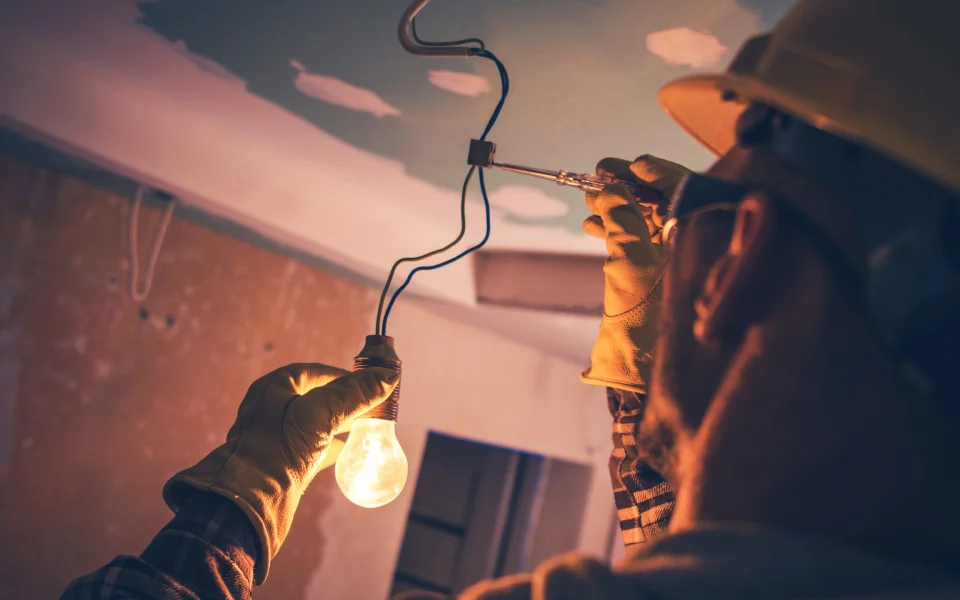
Home Wiring
Old House Wiring: Warning Signs in Older Oregon Homes
If you own one of the older homes around here, an Albany craftsman, a mid-century place out in Lebanon or Corvallis, you already know it has character that newer construction just doesn’t. The wiring behind those walls is a different story. A lot of homes in the mid-Willamette Valley were wired in an era when one or two outlets per room was plenty and nobody owned a microwave, a hair dryer, and a gaming PC running at the same time. Some of that old wiring is perfectly fine and will outlast all of us. Some of it is a real fire risk that needs to come out. The trick is knowing which is which, and that’s where a lot of homeowners get stuck. I’m Brandon, I’ve been doing electrical work for over 11 years, and my son works right alongside me. We pull a lot of old wire out of these valley homes. Here’s what we actually look for when we walk through an older Oregon house, and what should make you pick up the phone.
Knob-and-Tube Wiring
If your house was built before about 1950, there’s a decent chance some of the original wiring is still in the walls. Knob-and-tube is easy to spot in the attic or basement. You’ll see single wires running through little ceramic knobs and ceramic tubes drilled through the joists. When it was installed, it was good work. The problem is age and what people have done to it since.
Knob-and-tube has no ground wire, so it can’t safely handle a lot of what we plug in today. The bigger issue I see is insulation. Somebody blows insulation into the attic over the decades, and now that old wiring, which was designed to shed heat into open air, is buried and cooking. The cloth and rubber covering gets brittle and cracks. I’ve also seen plenty of spots where a handyman spliced modern Romex onto knob-and-tube inside a wall with no junction box, which is exactly how you start a fire you never see coming.
Not every length of knob-and-tube is an emergency. But if it’s buried in insulation, been tampered with, or feeding circuits that draw real power, it needs to go. We can usually rewire affected circuits room by room without tearing your whole house apart.
Cloth and Old Insulated Wiring
Step a little newer, into homes wired from the 1930s up through the 1960s, and you run into cloth-covered and early rubber-insulated wiring. From the outside it looks fine. Pull a cover plate off an outlet and the trouble shows up. That cloth or rubber jacket dries out, gets stiff, and flakes off the copper the second you touch it.
When the insulation crumbles, you’ve got bare conductors sitting close together inside a metal box. That’s a short or a ground fault waiting to happen. I see this a lot in Salem and Albany homes where the panel got upgraded at some point but nobody touched the wiring running out to the rooms.
A few warning signs you can check yourself, carefully:
- Outlets or switch covers that feel warm to the touch
- A faint burning or fishy smell near a receptacle
- Brittle, cracked, or discolored wire jackets when a cover is off
- Switches that crackle or spark when you flip them
If you see crumbling insulation, stop using that circuit and call us. Old cloth wiring doesn’t fix itself, and it tends to fail in the spots you can’t see.
Aluminum Branch Wiring
This one catches a lot of folks by surprise because the house isn’t even that old. From the mid 1960s into the late 1970s, copper got expensive, so a lot of homes got wired with aluminum for the branch circuits. Plenty of homes out in the newer-built parts of Lebanon, Sweet Home, and around Eugene have it.
Aluminum itself isn’t the enemy. The problem is how it behaves at connections. Aluminum expands and contracts more than copper as it heats and cools, so over the years the connections at outlets, switches, and the panel work themselves loose. A loose connection means heat, and heat at a wire connection is how houses catch fire.
The reason this scares me a little is that it gives almost no warning. You might notice an outlet that’s warm, a light that flickers, or a faint plastic smell, and you might notice nothing at all right up until there’s a problem. The good news is you usually don’t have to rewire the whole house. We can pigtail copper onto the aluminum at every connection using the right connectors, or in some cases replace the runs that matter most. If you know or suspect you’ve got aluminum branch wiring, please don’t ignore it.
Two-Prong Ungrounded Outlets
Walk through an older valley home and count the outlets that only take two prongs. Those are ungrounded, and there are more of them out there than people realize. A grounded outlet gives stray electricity a safe path to follow if something goes wrong. A two-prong outlet has no such path, so a fault has nowhere to go but through whatever you’re touching.
Here’s where it gets sneaky. A previous owner or a handyman swaps a two-prong outlet for a three-prong one so the new TV plugs in, but they never ran a ground wire. Now the outlet looks safe and isn’t. Your surge protector thinks it’s protecting your electronics and it isn’t doing a thing.
The other piece of this is GFCI protection. Older homes almost never have it in the kitchen or bathrooms, and code has required it in wet areas for decades now for a good reason. A GFCI outlet cuts power in a fraction of a second if electricity starts heading somewhere it shouldn’t, like through you while you’re standing at a wet sink. We can add proper grounding and GFCI protection where it counts, which is one of the most affordable safety upgrades we do.
Undersized 60 and 100-Amp Service
A lot of older Oregon homes are still running on a 60-amp or early 100-amp panel. That was plenty in 1955. It is not plenty today. Modern life runs on electricity, and an EV charger, a heat pump, a hot tub, or a kitchen full of appliances will push an old panel right to its limit.
Signs your service is undersized show up in everyday ways:
- Breakers that trip when the dryer and microwave run together
- Lights that dim when the heat pump or AC kicks on
- A panel packed full with no room for another circuit
- Reliance on power strips and extension cords because there aren’t enough outlets
Then there are the panels with a brand name on them that no electrician wants to see, like Federal Pacific or Zinsco. Those have breakers that don’t always trip when they’re supposed to, and we replace them on sight. If your panel is small, full, or one of the bad ones, a service upgrade is one of the best investments you can make in an older home. It buys you safety and it buys you room to actually use your house the way you live now.
What the Insurance Companies Are Doing About It
This part surprises homeowners more than anything else on this list. Your insurance company cares about your old wiring, and lately they’ve gotten a lot stricter about it. Knob-and-tube is the big one. More and more carriers in Oregon will either refuse to write a policy on a home with active knob-and-tube, jack the premium way up, or give you a deadline to have it removed.
The same goes for aluminum branch wiring and Federal Pacific panels. I’ve had folks call me in a hurry because they were buying or selling a home and the inspection or the insurer flagged the wiring, and now a deal is on the line. Aluminum often needs documentation that the connections were corrected the right way before a carrier will sign off.
If you’ve gotten a letter from your insurance company, or you’re about to put your home on the market, don’t wait until you’re up against a deadline. We can walk the wiring, tell you exactly what a carrier is going to flag, and give you a clear timeline and a price up front so you know what you’re dealing with. Getting ahead of it is always cheaper and less stressful than scrambling at the last minute.
Some old wiring will outlast all of us. Some of it needs to come out. Knowing which is the whole job.
If your home is older and you’ve got any of these on your mind, don’t lose sleep over it. We’re a small, family-owned crew, and every job gets our full attention. We’ll come out, walk the panel and wiring with you, tell you straight what’s fine and what isn’t, and give you a clear timeline and a price up front. No pressure and no scare tactics. Call Brandon at (541) 220-0295 for a free look at your panel and wiring, and we’ll get you sorted.
Common Questions
Is knob-and-tube wiring against code in Oregon?
Existing knob-and-tube that’s in good shape and untouched isn’t automatically illegal, but you can’t install new knob-and-tube, and you can’t bury it in insulation or extend it. The bigger issue for most Oregon homeowners these days is insurance, since a lot of carriers won’t cover a home that still has active knob-and-tube.
How much does it cost to rewire an older home in the Willamette Valley?
It depends a lot on the size of the home, how it’s built, and how much wiring actually needs to come out. Sometimes we only rewire a few problem circuits, sometimes it’s the whole house. The honest answer is we need to see it. We’ll come look at the wiring and panel for free and give you a clear timeline and a price up front before any work starts.
Do I have to rewire my whole house if it has aluminum wiring?
Usually not. For most homes around Lebanon, Albany, and Eugene with aluminum branch wiring, we pigtail copper onto the aluminum at every connection using the proper connectors rated for it. That fixes the loose-connection problem without tearing your house apart. A full rewire is only needed in certain cases.
Will an old panel pass a home inspection in Oregon?
A small 60-amp panel or a Federal Pacific or Zinsco panel will almost always get flagged by an inspector or an insurer, even if it’s been working fine for years. If you’re buying or selling a home in the valley, it’s smart to get the panel looked at before the inspection so there are no surprises holding up your deal.
Got an electrical question in Albany?
No call center, no runaround. You get Brandon and a small Oregon crew that has been doing this for 11+ years. Reach us for a free quote with a clear timeline and a price up front.