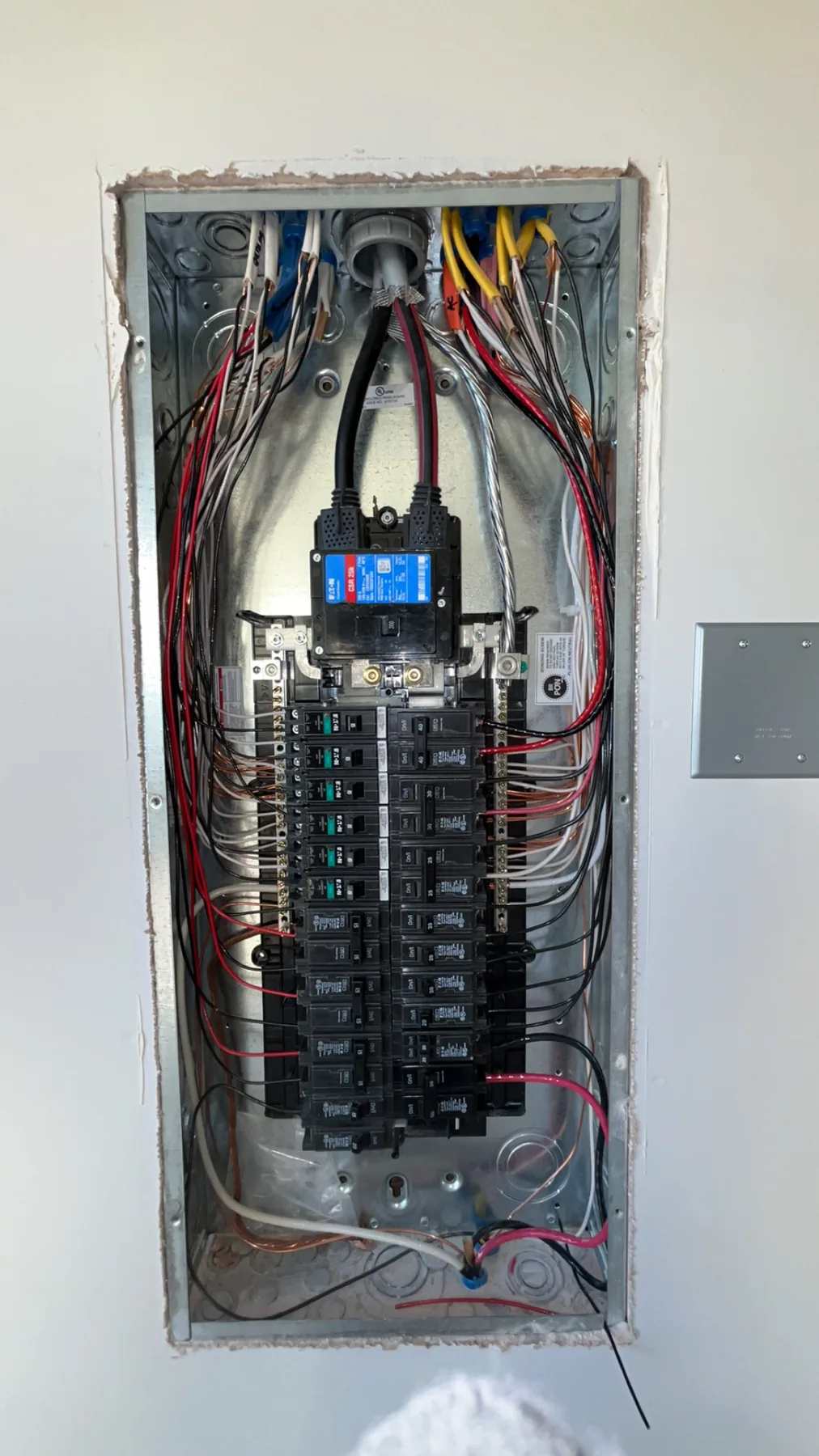
Panels
What Turns Up When an Old Panel Cover Comes Off
Most panel calls from Sweet Home start with something small. A breaker that trips when the well pump and the dryer run together, lights that sag for a second when the heat pump starts, a buyer’s inspection report with one line about the panel circled in pen. I am Brandon, and my son and I run Hub City Electric out of Albany, west of you down the river. In the older houses and rural places around Sweet Home, that small symptom is usually the panel asking for attention. This walks through what we check once the cover comes off, and how we help you decide what happens next.
The house shows its age before the panel does
A lot of homes around Sweet Home were built in stages. A porch got closed in for a laundry room, a woodstove gave way to baseboard heat and later a heat pump, a shop went up out back with a cable run from the house. Every one of those changes landed on the same service, and very few of them came with a fresh look at whether the panel could carry the new load. We still find fuse boxes in service on some of the rural places, and plenty of panels that were adequate the year they went in and crowded ever since.
So before we touch the panel, we walk the house. Outside, we look at the meter base and the mast where the service comes in, and at how the grounding is done. Inside, we count what has been added over the years and ask what you plan to add next. That conversation matters as much as anything behind the cover. The right answer for a house with a heat pump on order is different from the right answer for a house that is staying the way it is.
What we look for behind the dead front
Once the cover is off, a handful of things tell us most of the story.
- Heat. Darkened plastic, a discolored bus bar or a breaker that is warm to the touch means a connection has been loose long enough to cook. That never fixes itself.
- The label. Federal Pacific Stab-Lok and Zinsco panels are both known for breakers that may not trip when they should. If we find either one, we replace it, and we say so on the first visit.
- Crowding. Two wires under a breaker screw made for one, tandem breakers forced into slots that do not allow them, and a directory that no longer matches anything in the house.
- Openings. Missing knockout plugs and filler plates let in dust and, out in the country, the occasional mouse. A rural panel with a nest in it is more common than you would guess.
None of this is rare in an older house. Finding one problem does not automatically mean a new panel, and finding none does not mean the panel is ready for what you want to add. It means we have facts to talk from instead of guesses.
The panel is the one part of the house that has been quietly keeping score of every addition since the day it went in.
Replacing it or leaving it alone
We do not replace every panel we open. If it is a sound brand, the connections are clean, there is room for what you have planned and the grounding checks out, we will tell you to leave it alone, and maybe fix the directory while we are standing there. A good number of our visits end exactly that way.
A recalled panel sits at the other end of the scale. We replace those every time, because the whole job of a breaker is to trip and those have a record of not doing it reliably. In between is the judgment call: a panel that is safe but full, or one with a damaged bus on a single slot. Sometimes a subpanel for the shop is the right move and the main stays put. Sometimes the main is old enough and crowded enough that patching it just means doing the work twice.
When replacement is the answer, the full scope of the job is on our Sweet Home panel replacement page. We lay out which way we would go and why, and the decision stays yours.
If yours does come out, we size the replacement around the hungry loads out here, the well pump and the heat pump and any shop subpanel you have in mind, and leave room for a generator hookup, which is a good moment to have the transfer switch side looked at too through our generator repair work in Sweet Home.
Living with the old panel until the swap
Once you know a panel is going, there is usually a stretch of weeks before the new one goes in while the paperwork and the shutoff date line up. That stretch is mostly normal life, with a few rules.
Do not add anything big. The hot tub, the new table saw, the second space heater in the bedroom and the car charger can all wait until the new panel is in. Keep the space heaters you already run on separate rooms, and do not let a handyman slip a tandem breaker in to free up a slot. If a breaker trips, reset it once. If it trips again, leave it off and tell us which one.
Put your hand flat on the panel door now and then during a heavy evening, when the dryer and the heat are both going. It should feel about like the wall beside it. If it feels noticeably warm, if you hear buzzing or crackling from inside, or if you smell hot plastic near it, turn off the big loads and call us right away rather than waiting for the swap date. Smoke or sparks are a different call: get everyone out and dial 911.
None of that is meant to scare you. Most old panels make it to their replacement day without a peep. Knowing what normal feels like just means you will notice if yours stops being normal.
If your panel has been bothering you
Call Brandon at (541) 220-0295 or use the contact page, tell us what has been tripping or flickering, and we will come look at the panel and give you a straight answer about whether it stays or goes.
Common Questions
My home inspector flagged the panel. Does that mean replacement?
Not necessarily. Inspectors flag what they can see without taking things apart, so the note might be a recalled brand, a double-tapped breaker, a missing filler plate or simply age. Some of those are a quick repair. Send us the page from the report and we will tell you which kind it is before anyone talks about a new panel.
Can you tell over the phone whether my panel is one of the bad brands?
Often, yes, from a clear photo of the label inside the door and a wide shot of the breakers with the door open. Do not take the cover off to get it. A photo gets us most of the way, and we confirm in person, because some old panels were fitted with mismatched breakers over the years.
Should I plan for a generator while the panel is open?
If you live where outages run long, yes. While the old panel is out we can leave breaker space and the right layout for an interlock or a transfer switch, even if the generator itself is a purchase for next year. Adding that later means opening everything up again, which is a bigger job than planning for it while the walls and cover are already apart.
Wondering what is behind your panel cover?
You get Brandon and his son on the job, no subcontractors and no call center, with 11+ years of the founder’s experience behind every panel. We give you a free quote with the price up front.