Halsey Surge Protection
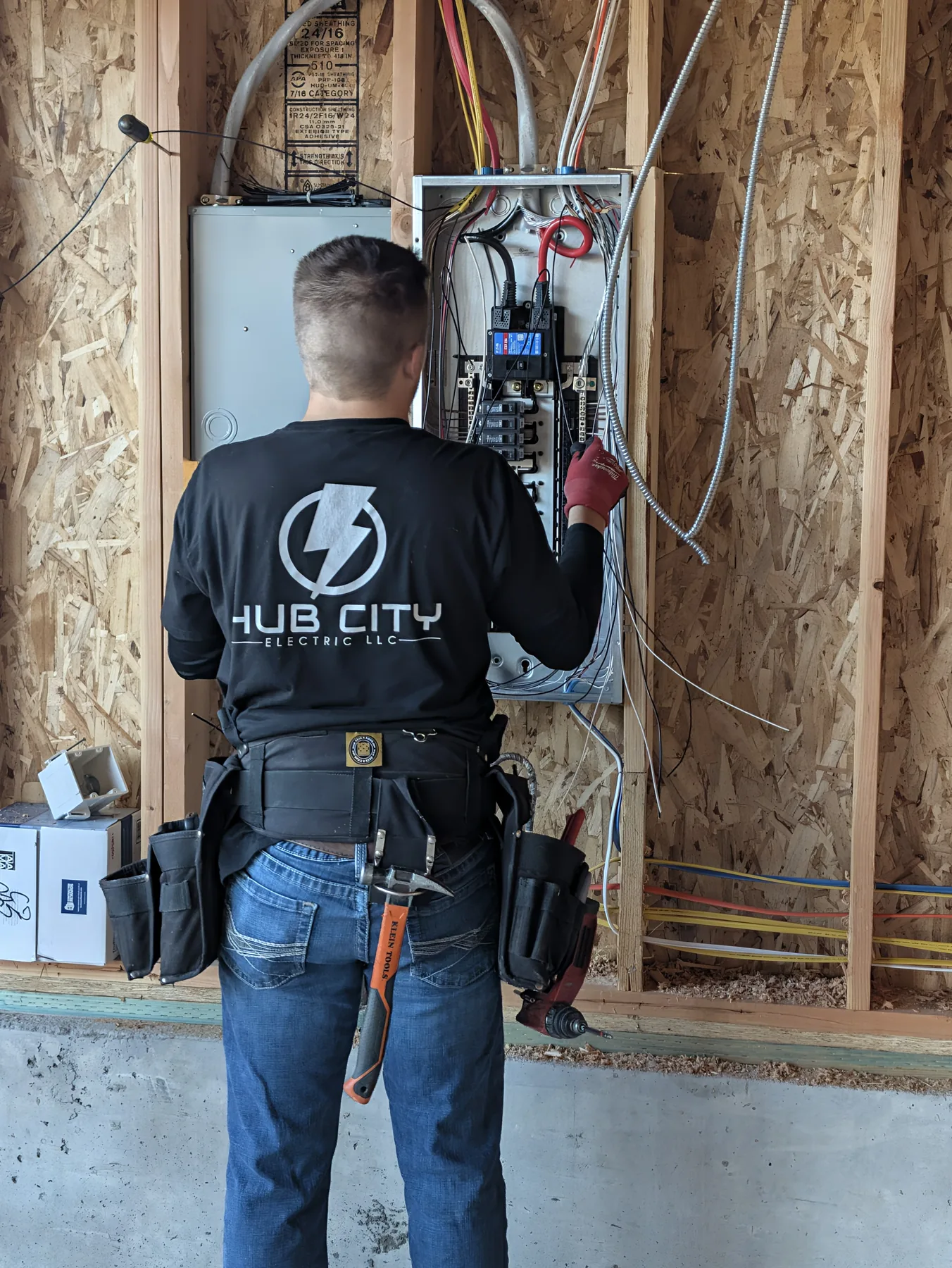
When a storm knocks out a rural feeder, the power rarely comes back in one clean step. It can blink on, drop out and return again while the line crew works, and every one of those returns can arrive as a spike. A whole-home surge device at your main panel takes that first hit for the well pump controls, the shop freezer and the furnace board. Brandon mounts it on its own breaker and checks your grounding while the cover is off. Most installs run an hour or two.
Why Rural Power Comes Back Rough
Halsey runs on rural feeders, and wind or ice out here can take a line down for a while. The restore is seldom a single flip of a switch. Crews energize, test and sometimes drop the line again, and each of those returns pushes a short burst of excess voltage through your service and into anything with a circuit board.
Lightning does the same on a bigger scale, even when it strikes well away from your place on the lines that feed it. A spike does not need to fry something on the spot to cost you money. Smaller hits, repeated over a few winters, wear down the electronics inside appliances until a control board quits on a calm afternoon and nobody thinks to blame last season’s storms.
A whole-home device deals with that at the point where power enters the house. Mounted at the main panel, it clamps the spike and sends the extra energy to ground before it can spread down the branch circuits that feed your rooms, your shop and your outbuildings.
What a Working Property Has to Lose
A house in town mostly risks a television and a router. A Halsey property usually has more riding on clean power, and the expensive pieces are often the ones nobody thinks about until they stop.
Well Pump Controls
The pump control and pressure switch stand between you and a dry tap. When a storm takes out the control board, the household goes without water until the replacement part shows up.
Freezers and Refrigeration
A chest freezer holding a season of meat and garden produce is worth guarding. Newer units run on electronic controls that dislike spikes as much as any computer does.
Shop Tools and Chargers
Variable-speed tools, battery chargers, a welder with digital settings and the compressor controls. Most shops carry more electronics than their owners realize.
Furnace and Heat Pump Boards
The board inside a furnace or heat pump is a frequent surge casualty, and it has a habit of failing on the coldest night of the year.
Inside the house the list keeps going: the newer washer with its touch panel, the laptop on the kitchen table, the garage door opener, the security camera on the barn. A panel-mounted device covers every circuit at once, including the outlets nobody ever thought to plug a protector into.
Where the Plug-In Strips Fit
The strip behind your television still earns its place. It simply cannot do the whole job by itself, so we think of protection in layers that start at the service and end at the outlet.
At the Service
The panel device meets a spike where it enters the house, before the energy splits off down dozens of circuits.
On Its Own Breaker
It lands on a dedicated breaker, and most units carry a status light that tells you when a big hit has used it up and it needs replacing.
At the Outlet
Point-of-use strips catch the small surges made inside the house when a pump or compressor cycles off.
Down to Ground
All of it depends on a solid ground. A surge device with nowhere to send the energy is only a box on the wall.
Keep your strips on the computer and the television. With a device at the panel absorbing the large hits, those strips only have to deal with what is left over, and they tend to last a good deal longer for it.
Opening the Panel Means Checking the Rest of It
A surge device is only as good as the panel it goes into. Before mounting one, Brandon confirms there is a free space for its breaker or a sensible way to make one, then tests the grounding electrode and the bond between neutral and ground. On plenty of older Halsey farmhouses, that grounding was set once a long time ago and has not been touched since.
If the panel is packed full, worn out or one of the older brands known as a fire risk, we tell you plainly and price the choices side by side. Sometimes a breaker or two can be rearranged to make room. Sometimes the honest call is to replace the panel first and set the surge device in with the new one, which is easy to do on the same visit.
Farmhouses with old service often show their age right here. A small panel that was fine for a few lights and a range now carries a well pump, a freezer, shop circuits and a heat pump. While the cover is off, we look at how loaded it really is and tell you straight whether it has the room.
Where the service was upgraded in pieces over the years, we also glance at the meter base and the service mast on the way in. A loose or corroded connection there causes trouble that no surge device can fix, so it is worth knowing about before the next storm.
Other Halsey Work That Pairs With It
Surge protection often comes up next to other jobs on the same property. A house going up on a parcel of family land is the simplest place to add one, since the panel is new and wide open, and our Halsey new construction electrical page covers that build. If a storm has already done its damage, Halsey emergency electrical explains how we handle the urgent part first.
Connected switches and thermostats are exactly the gear a spike goes after, so anyone planning Halsey smart home wiring should think about the panel too. And if an old farmhouse kitchen is about to come apart, the Halsey electrical remodels page walks through that job.
Permitted, Inspected and Close to Home
A surge device ties into your service, so the Linn County permit and its inspection are part of our job, never something we hand back to you. Halsey sits just down the road from our shop in Albany and well within our 70-mile radius, which means no travel fee on the visit.
Our residential surge protection page covers the device options we install around the valley, and the Halsey overview lists the rest of what we handle in town. Veterans get 5% off the install.
Get it in before the next windstorm
Call Brandon, tell him what runs on the property and roughly how old the panel is. He will come out, look it over and give you a clear price up front, with no push to add anything you do not need.
Surge Questions From Halsey Property Owners
How long does a whole-home surge install take?
Most take about an hour or two once we are on site. That covers shutting the power off, mounting the device beside the panel, landing it on its own breaker and testing the grounding. If the panel needs work first, we tell you before anything starts.
Should I get a Type 1 or a Type 2 device?
It depends on your service. A Type 1 device can sit on the line side, ahead of the main breaker, which suits some rural services fed by long overhead runs. A Type 2 mounts on the load side at the panel. We look at your setup and recommend the right one.
Will a panel device protect my well pump?
It protects the pump circuit and its controls from spikes arriving on the utility lines, which is where most storm damage comes from. The pump motor can also create small surges of its own when it cycles, one reason we suggest outlet protection on sensitive electronics as well.
Do I still need surge strips once it is in?
For computers, televisions and anything else costly and sensitive, yes. The panel device is the main barrier against large surges coming in from outside, and the strip is a second layer for what gets generated inside the house. Together they cover far more than either one alone.
My farmhouse panel is old. Can you still add one?
Often, yes. We check for an open space, the condition of the panel and the grounding. If it is full, failing or a brand known as a fire risk, we lay out the cost of replacing it next to the surge device so you can decide what makes sense.
Are you licensed in Oregon?
Yes. Hub City Electric LLC holds Oregon CCB#247871 and is insured. The company was founded in 2023, and Brandon brings more than 11 years of hands-on electrical experience to every panel he opens, from farmhouses to brand new builds.