Lebanon Panel Upgrades
Every circuit in the house answers to one box on the wall, and when that box is full or fused, the house stops growing. We swap tired services for modern panels across Lebanon, sort out the utility and the inspection, and put the number in writing first. Brandon runs the crew himself. Oregon licensed, CCB#247871.
The Core of Town Predates Modern Load
The houses closest to Lebanon’s downtown were built for a household that owned very little that plugged in. A lamp, an iron, eventually a refrigerator. Whatever service came with the place was plenty at the time, and plenty of those services are still sitting there today wearing a few decades of additions somebody made along the way. A fuse panel. A small breaker box with a subfeed hanging off it. A meter base weathered enough that you can read its age from the sidewalk.
Nothing about that is dramatic. Old services rarely announce themselves. What they do instead is quietly set a ceiling on the house, and the family living there adapts without ever deciding to. The dryer waits until the shop heater is off. Nobody runs the window unit and the microwave together. When the tank water heater finally dies and the replacement is electric, the room in the box turns out to be a room that was never actually there.
The newer parts of town, the subdivisions that came in during Lebanon’s growth years, arrive with a different question. Those services are usually big enough, so the conversation turns into whether a subpanel out in the garage or shop is the right answer instead of touching the main. We would rather find that out and tell you than sell a full service change you did not need. Reading what is on the wall costs you nothing.
Service Change to 200 Amps
The common one. A small or aging service comes off, a 200-amp panel goes on, and we deliberately leave open positions so the next thing you add does not restart this conversation.
Fuse Panel Retirement
A fuse only protects a circuit while it is the correct fuse, and nothing stops the next person from screwing in a larger one. We pull the whole assembly and set breakers matched to the wire behind them.
Panels With Known Problems
Certain panel lines from decades back have breakers with a poor record of tripping when a fault calls for it. We will show you what is in your box and what we recommend doing about it.
Counting the Actual Load
Heat, water heater, cooking, laundry, shop tools, anything charging. That total decides the service size before a single part gets ordered, which is the difference between engineering and guessing.
Meter Base, Mast, Conductors
The box indoors is one piece of the system. When the meter base is corroded, the mast is loose, or the entrance conductors are undersized, those come out during the same visit.
Grounding Brought Current
Grounding and bonding standards moved a long way since most of these homes were wired. We correct that as part of the change, because a new panel with an old ground is only half of an upgrade.
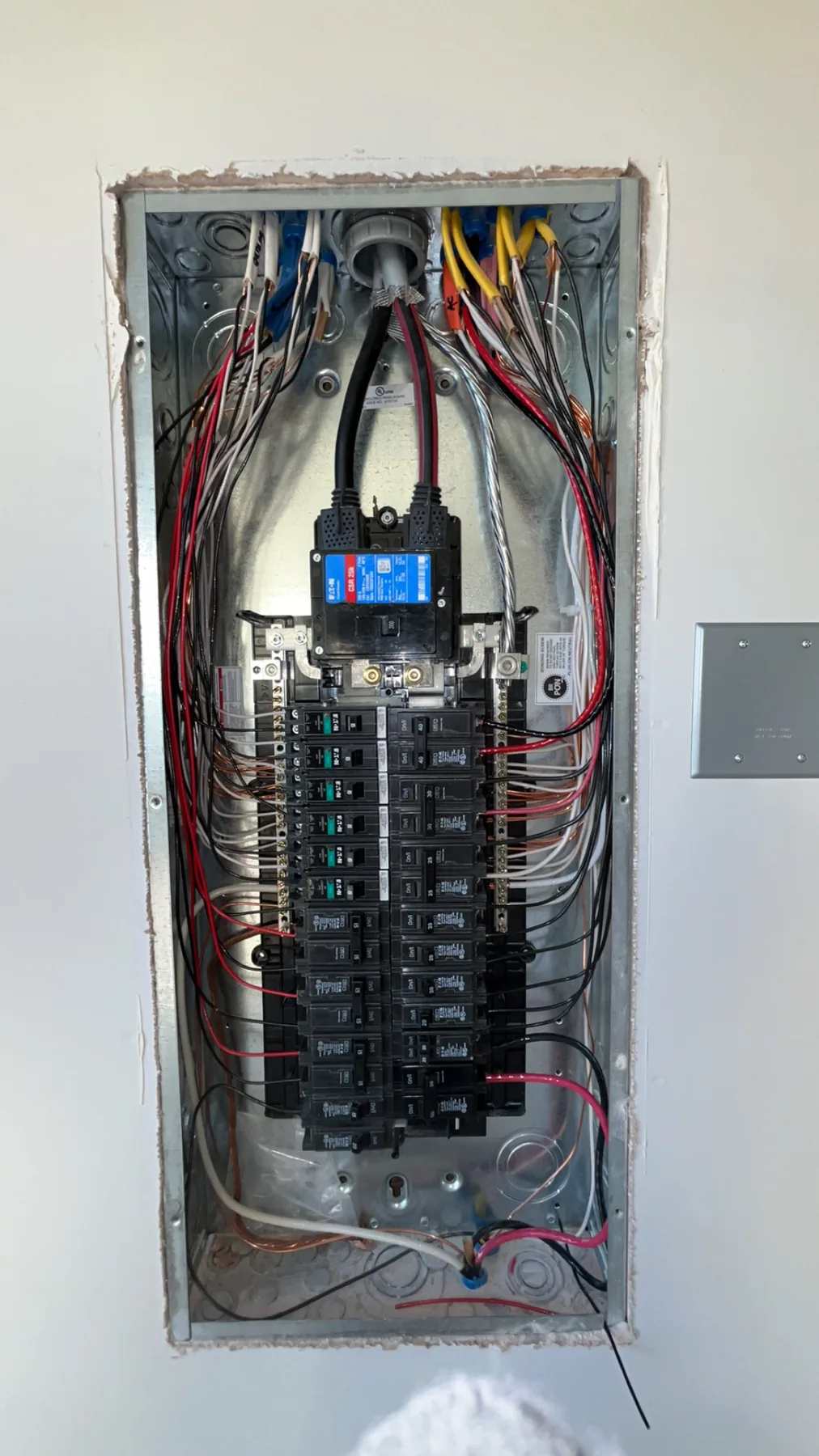
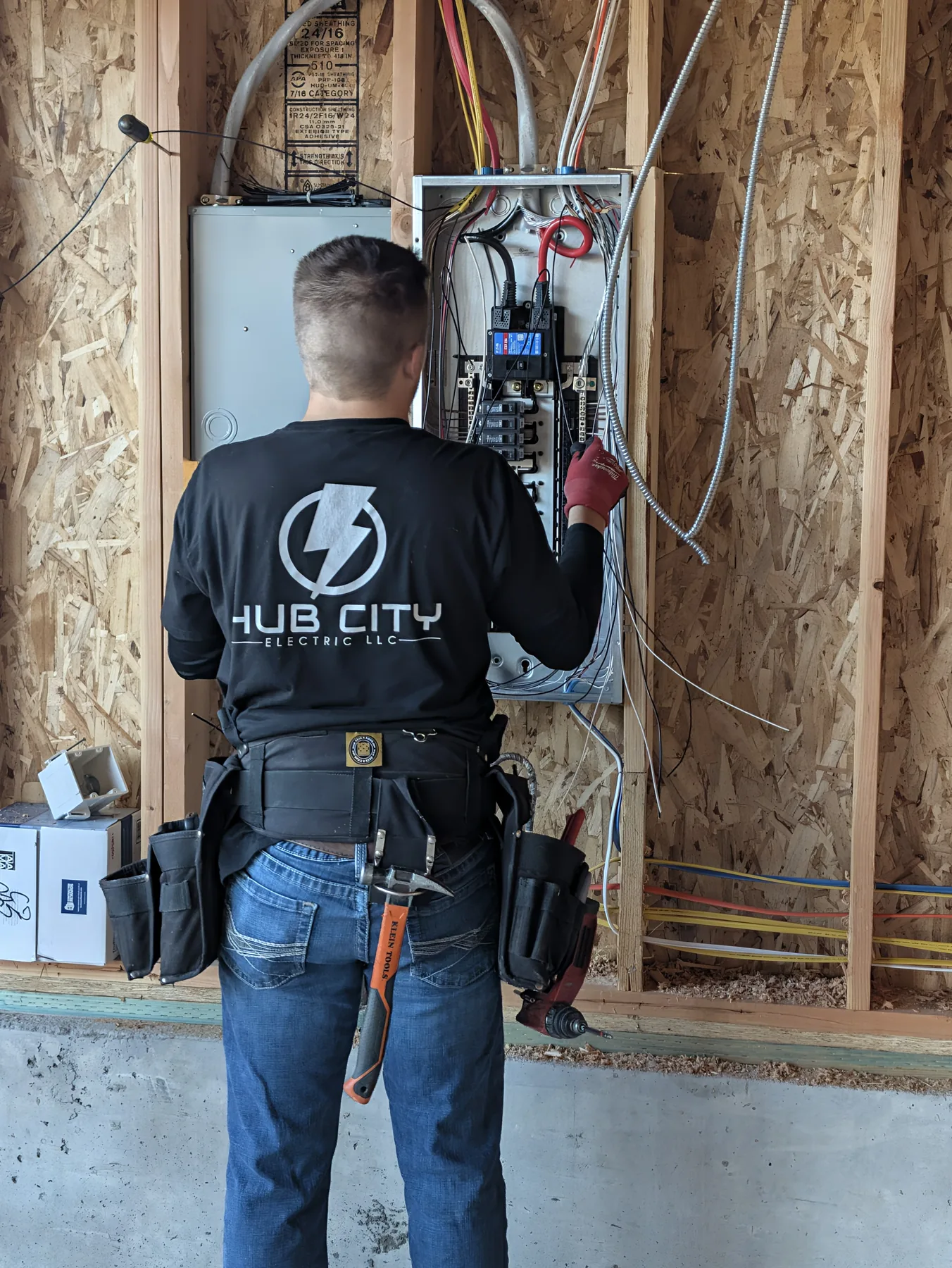
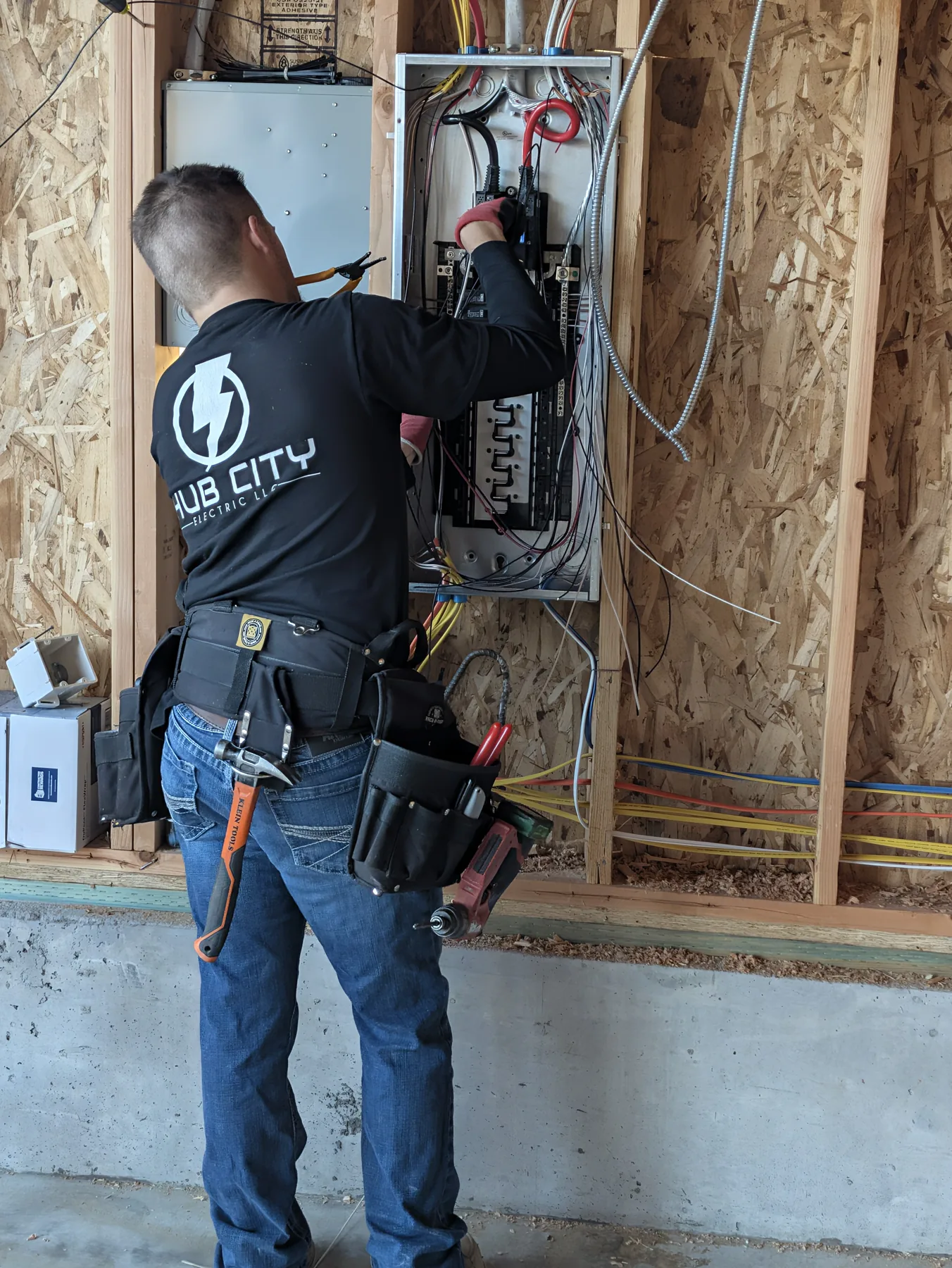
Panel work, up close
A look inside our panel work: the main breaker, the branch circuits and the wiring that feeds them.
The Utility Holds One Key, the Inspector Holds the Other
Here is the part homeowners are usually surprised by. A service change happens right where your house meets the grid, which means the power company has to come pull the meter before we can safely take the old gear off the wall, and come back to set it again when the new gear is on. We arrange that. What we cannot do is invent a slot on their calendar, and any contractor promising you one has not done many of these.
The second party is the inspector. We pull the Linn County permit, wire the service to Oregon code, and get an inspection scheduled so the finished upgrade lands on the county record. That record is what an appraiser, an insurer, or a buyer’s agent asks about years from now, and it is the reason we would not skip the permit even if you offered.
So we tell you honestly that the calendar has some flex in it, rather than naming a day we do not control and disappointing you later. Once both pieces line up, the work itself is normally a single day. We settle the power-off window with you ahead of time, because losing power for a day you planned for is an inconvenience and losing it on a day you did not is something else. Lebanon sits a short run east of the shop, which means no travel charge and no trouble getting back out when the inspector is ready.
Adding capacity for a car later? Mention it early. See EV charger installation in Lebanon, or the full list of services we handle.
Veterans get 5% off. Call (541) 220-0295 and we will get you squared away.
One Day, Start to Finish
Four stages, and you will know which one we are in at any point. Nobody on this job is a stranger to you, because the two people who look at your panel are the two people who replace it.
The Read
Brandon opens the box, checks the meter base and grounding, counts your real loads, and leaves a written price. Coming out to look is free.
Paperwork First
Permit filed with Linn County, disconnect arranged with the utility, and a power-off window picked around your work week.
Swap Day
Old gear off, new service mounted and fed, every circuit landed and labeled, grounding and bonding brought up to current code.
Signed Off
Utility reconnects, the inspector comes through, and you keep a directory that tells the truth about what each breaker feeds.
Building In Room You Have Not Used Yet
The cheapest capacity you will ever buy is the capacity you ask for while the panel is already open and the power is already off. Once the cover is back on and the inspector has signed, adding room later means another visit, another disconnect, and another round of scheduling with the same two outside parties.
That is why we ask about the next five years during the walkthrough instead of only the next five days. A car in the driveway that will need charging. A shop out back that is going to want its own subpanel and a real welder circuit. A heat pump replacing a furnace when the furnace gives up. Backup power, which comes up more often every year in this part of the valley. None of those have to happen now. They just have to be accounted for now, so the service is sized and the positions are reserved.
Panel work is one piece of what we do here. Start at the Lebanon service overview, or step up to Linn County and the wider service areas we cover.
Small family crew. No subcontractors, no call center, no surprises on the invoice.
Lebanon Coverage, Corner to Corner
From the older streets around the historic downtown out to the newer subdivisions and the businesses that have grown up near the medical school campus. Wondering whether your street is in range? Ask us and you will get a straight yes or no.
Out of slots, or still on fuses?
Call Brandon and we will come read what you have, count the loads, and tell you plainly whether the service needs replacing or just needs a circuit. Coming out to look costs nothing, and the number goes in writing before a tool comes off the truck.
Questions We Field Around Lebanon
There are fuses in my basement. Does the whole thing have to go?
Realistically, yes. A fuse works only while somebody keeps the right one in the socket, and across the life of an older house that discipline usually slips. You also cannot land a modern circuit in one. We replace the assembly with breakers sized to the wire and label every position.
What decides the price on a job like this?
What we find when we open things up. Service size, whether the meter base and mast leave with the panel, how far the box sits from the entrance, the condition of the grounding, and what the utility and permit side involves at your address. One written number covers all of it before we schedule.
My service is small but the house feels fine. Do I need this?
Maybe not, and we will tell you so. The load calculation settles it rather than a sales pitch. Plenty of Lebanon homes carry what they run today without complaint. It is adding a second big electric load, usually heating or a vehicle, that tips the math over.
How long will my house be without power?
Most of a working day. The utility disconnects at the meter so we can handle live gear safely, and it stays down until the new service is set and they come back to reconnect. We pick that window with you in advance so the day is planned around rather than survived.
Is a permit really necessary in Lebanon?
Yes, and we would pull one regardless. Service work is permitted and inspected through Linn County, and that inspection is what puts the upgrade on the record. Undocumented electrical work tends to surface at a sale, a refinance, or a claim, which is the worst possible timing.
Do you handle panels near the historic downtown?
Regularly. The older housing stock around the core is exactly where fuse panels and undersized services still turn up. Tight service entrances and long-ago additions come with the territory, and we work through them the same way, reading what is there before deciding anything.
Can the new panel be ready for backup power later?
Yes, and it is worth deciding while everything is open. Setting the service up so a transfer switch can be added later is a small addition during the swap and a considerably larger project once the cover is on and the job has been signed off.