Brownsville Wiring Services
An older Brownsville house usually carries several eras of wiring at once. Some knob-and-tube still doing its job upstairs, two-prong outlets with nothing grounding them, and circuits somebody extended whenever a room got a new use. We work out what is safe to keep and what needs to go, fish new cable through the plaster without wrecking the trim, and add grounded outlets, GFCI protection and new boxes where the way you live now calls for them.
Reading the Wiring an Old House Has Collected
Wiring in a house that has stood for generations is rarely one system. It is closer to a record of everyone who ever needed another outlet. We usually find some knob-and-tube still feeding a bedroom or two, two-prong receptacles with no ground behind them, and branch circuits that were stretched room to room until one breaker carries half the upstairs.
None of that means the house is about to catch fire. It does mean somebody qualified should pull a few cover plates, trace where each circuit runs and tell you plainly which parts are sound. That is our first visit, and you leave it with a free quote and the price up front.
Knob-and-Tube
Porcelain-insulated runs were built for a few lights and a radio. We check whether any are still live, what they feed, and whether insulation has been blown in around them.
Two-Prong Outlets
A receptacle with no ground becomes a real problem once a computer or a microwave gets plugged into it. We run a grounded circuit, or add GFCI protection where that is an accepted fix.
Stretched Circuits
When a breaker trips every time the space heater and the vacuum run together, that circuit is feeding rooms it was never sized for. We split the load up properly.
Kitchens and Baths
Counter and bathroom receptacles get GFCI protection and their own circuits, so a hair dryer and a toaster stop sharing a line with the hallway lights.

New Cable Through Old Walls, Trim Left Intact
Original plaster and woodwork are a big part of why people buy a heritage house in Brownsville, and nobody wants a rewire to leave the walls looking like a quilt. Most new runs can be fished. We come up from the crawlspace or basement, drop down from the attic, and follow the routes the house already offers: open stud bays, closets, the back of a built-in.
Where plaster does have to open, we keep the hole small, put it where a patch hides best, and talk it over with you first. Baseboards and door casings come off with care and go back in the same spot. It is slower than ripping out lath, and it is how a house like this deserves to be treated.
That same fishing work lets us set a box exactly where you want one today. A TV over the mantel needs a receptacle behind it and a clean path for its cables. An electric fireplace needs its own feed and a switch within easy reach. We place them so the wall looks like it always had them.
Worst Circuits First, or the Whole House at Once?
This is the question we get most in older homes, and you deserve a straight answer to it. Sometimes a full rewire is the right call: the knob-and-tube runs everywhere, insulation has been packed in around it, and patching circuit by circuit would cost more over the years than doing it once. Other times most of the wiring is in good shape, and the sensible move is to replace the two or three circuits that worry us and leave the rest alone.
We will tell you which kind of house you have and show you why, with the problem circuits marked. If the work turns up a fuse box or a panel with no main disconnect, that is a separate job, covered on our Brownsville panel installation page. A routine look inside a panel that still works is on the panel maintenance page.
Porch Lights That Stay On in the Rain
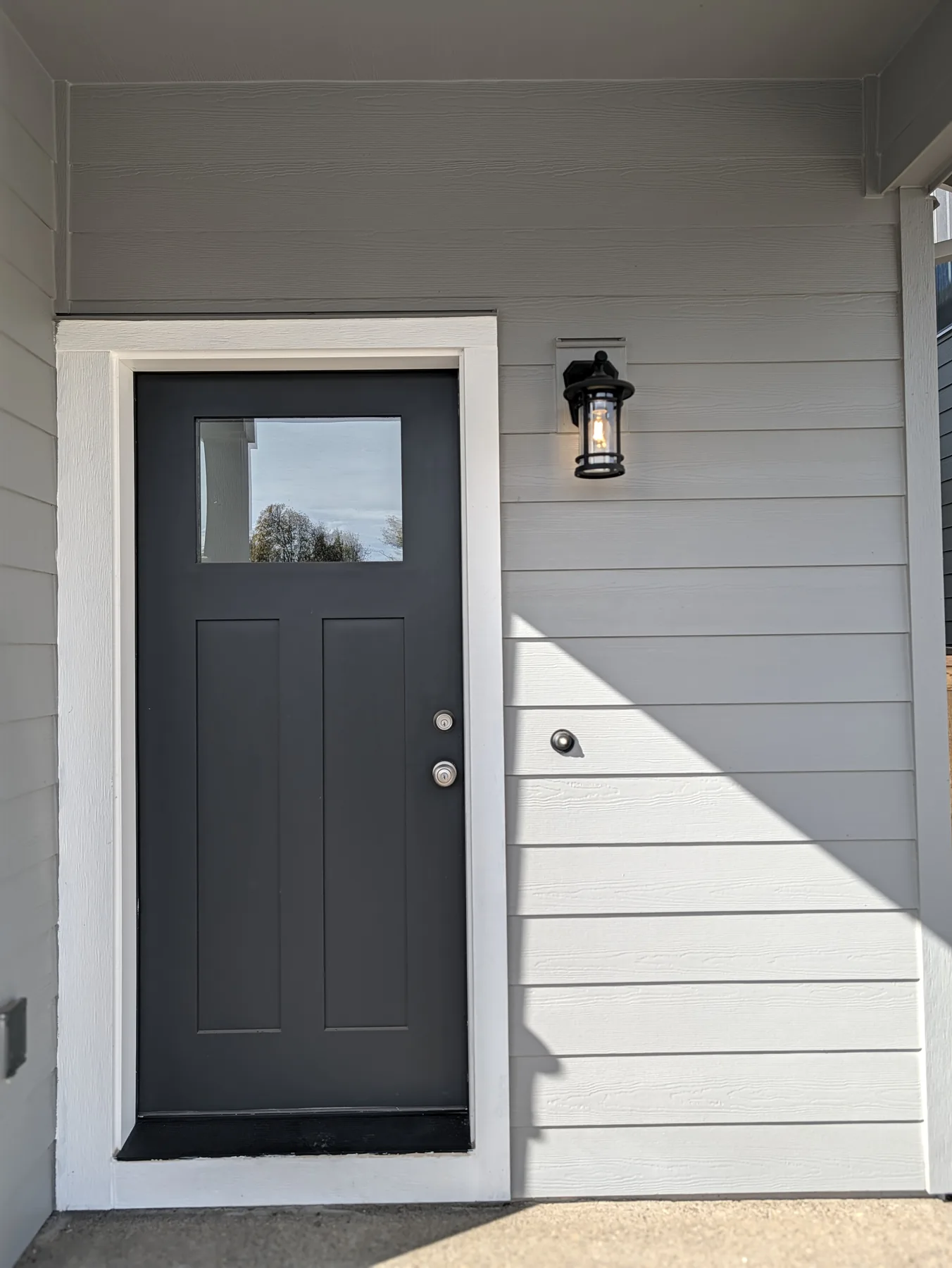
Outdoor fixtures on older houses were often tapped off whatever indoor circuit sat closest, with a splice tucked in the wall and nothing keeping weather out of the box. When a porch light flickers every wet evening, that is usually the reason. We give exterior lights and receptacles a properly protected circuit of their own, use boxes and covers rated for the outdoors, and seal the hole through the siding so water stays out of the wall.
While we are out there, it is worth thinking about what else belongs outside. A receptacle by the garden beds, a light over the back steps, or a fixture above the garage door on a switch just inside.
From the First Cover Plate to the County Sign-Off
Trace
We open boxes, test circuits and map which breaker or fuse feeds which room, so the plan rests on what is really in the walls.
Price
You get a written free quote with the priorities in order, so you can decide how far to go and when.
Rewire
We shut power down one circuit at a time where possible and turn it back on before we leave each day.
Inspect
We pull the Linn County permit and meet the inspector, so the new wiring is documented on record.
Brandon and his son do every step themselves, so the faces in your hallway stay the same all week. More on how we approach this work is on our wiring services page, and the rest of what we do locally is on the Brownsville overview. Veterans get 5% off; call (541) 220-0295 and mention it.
A Short Drive From Our Albany Base
Brownsville sits well inside our 70-mile radius, so a wiring job here carries no travel fee. It is a quick trip down from Albany, which makes coming back the next morning to finish a run easy to schedule. Give us a call to confirm coverage for your address.
Warm cover plates or a breaker that keeps tripping?
Call Brandon and tell him what you have noticed. He will come trace it, explain what he finds in plain terms and leave you with a free quote and the price up front.
Old-House Wiring Questions From Homeowners
How long does a wiring job take in an older house?
That depends on how many circuits are involved and how much plaster sits between us and the attic. Swapping out a few problem circuits is a far smaller job than a whole-house rewire. Once we trace the wiring, the free quote includes a schedule, so you know how long each room will be affected.
Is knob-and-tube wiring dangerous?
It was reasonable wiring for its day, but it has no ground, its insulation turns brittle with age, and it was never meant to sit buried in attic insulation. Whether yours needs to come out depends on its condition and what it feeds, which is exactly what our first visit settles.
Can you add grounded outlets without rewiring everything?
Often, yes. We can run a new grounded circuit to the rooms that need it most, such as a home office or the kitchen, and use GFCI protection on other two-prong outlets where that is an accepted fix. We explain which approach suits each room before any work begins.
Will the work damage my plaster and trim?
We do everything we can to avoid it. Most cable can be fished through attics, crawlspaces and existing cavities. When a wall does have to open, we keep the hole small, put it where a patch hides well, and remove trim carefully so it goes back exactly where it was.
Does rewiring need a permit in Linn County?
Yes. We pull the Linn County permit and schedule the inspection, so the new wiring is on record. For an older home that record is worth having, because it shows a licensed electrician brought the circuits current, and that helps when it comes to insurance and selling the house.
Can we keep living in the house during a rewire?
Yes. We turn power off one circuit at a time wherever we can and restore it before we leave each day. If part of the house has to stay dark longer, you hear about it in advance, and we plan around the refrigerator and the heat.
Is there a veteran discount on wiring work?
There is. Veterans get 5% off, wiring included. Tell us when you call or when you fill out the contact form, and the discount gets written onto your free quote next to everything else we have priced for the job.