Surge
When the Power Comes Back On Hard Out in Halsey
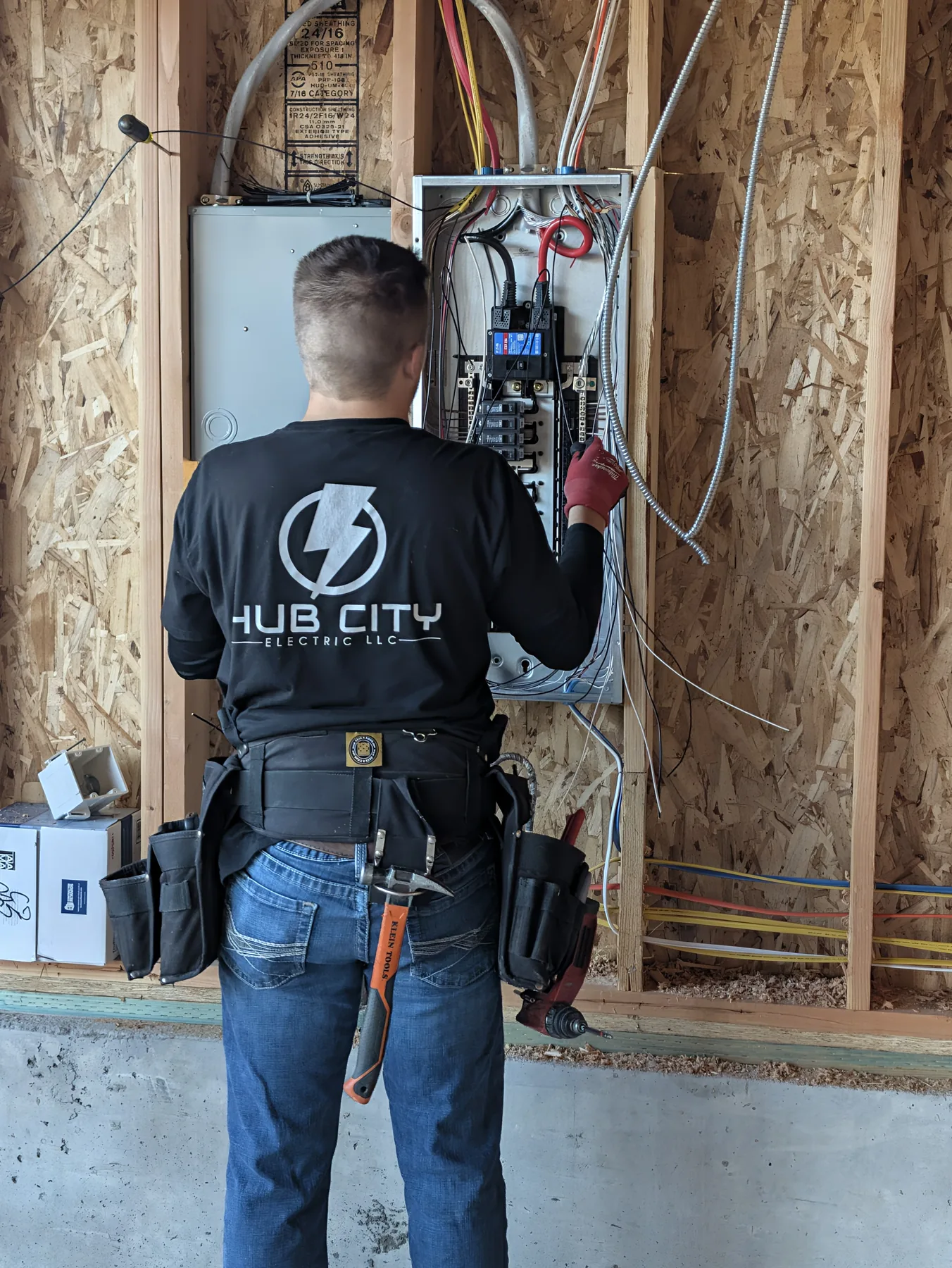
Most people in Halsey picture a power surge as a lightning strike. The trouble we run into more often shows up after a storm, when a rural feeder has been down for a while and the power comes back on with a jolt. The lights flicker, the well pump kicks on, and a day later the furnace will not start. I am Brandon, and my son works alongside me at Hub City Electric, a short run up the road in Albany. This is how we think about protecting a farm property from that moment.
The surge rides in with the restored power
When a line crew restores a feeder, every house on it comes back at once. Motors start together, transformers settle, and voltage can swing above and below normal for a few seconds before it levels out. Rural lines that also take wind, falling branches and the odd equipment strike see those swings more than most folks realize.
Most of the damage is quiet. A circuit board takes a hit it survives once, then gives up after the third or fourth outage of the winter. Nobody connects a dead thermostat in February to the storm back in November, but we see that pattern every year.
That is why we talk about surge protection in terms of outages rather than lightning. A direct strike is rare and nothing fully stops one. The everyday spikes that come with power returning, with a big motor cycling on the same service, or with trouble down the line are what a whole-home device is built to absorb. Our Halsey surge protection page covers the install itself. This post is about why the timing matters on a farm.
Where the expensive damage hides
A house in town has a TV and a fridge worth protecting. A working property around Halsey usually has a longer list, and most of it carries electronics that did not exist a generation ago.
- Well pump controls. The pressure switch and control box are the reason there is water at the kitchen tap and in the stock tank.
- Freezers. A chest freezer full of the year’s beef or garden produce is worth more than the freezer, and newer ones run on control boards that do not like spikes.
- The furnace board. A failed board on a cold morning is a rough way to learn what a surge did.
- Shop tools and chargers. Welders, compressors, battery chargers and anything with a variable speed motor out in the detached shop.
Most of that never sits behind a power strip. The pump controls and furnace are hardwired, and the freezer and chargers plug straight into the wall, which is exactly why the protection belongs at the panel.
On a farm, the surge worth worrying about is the one that arrives when the power comes back.
One device at the panel, on its own breaker
A whole-home surge protective device mounts at the main panel and lands on a breaker of its own. Depending on how the service is set up, it is a Type 1 unit on the line side or a Type 2 unit inside the panel, and we pick the one that suits your service and your equipment. On most homes it is about an hour or two of work.
Once it is in, it covers every circuit in the house at the same time. When voltage jumps, it sends the excess to ground before it reaches the branch circuits feeding the well, the freezer and the furnace. Most units carry an indicator so you can tell at a glance that the protection is still there, and we show you where to look.
If your detached shop or barn runs off a subpanel, we talk about whether that panel should get a device too. A long feeder out to an outbuilding is its own path for trouble, and the tools out there are often the priciest things on the place.
Plug strips are the second layer
Plug-in surge strips still have a job. They sit right at the computer, the TV or the router and catch what slips past the panel device, along with small spikes that start inside the house when a big motor shuts off.
The problem comes when a strip is the only layer. It protects only what is plugged into it and does nothing for the hardwired loads that matter most on a farm. Many strips also wear out silently after absorbing a few hits, then keep working as a plain extension cord long after the protection is spent.
So our usual advice is both. A device at the panel guards the whole house, and good strips guard the electronics you care about most. The panel device takes the big hits off the top, so the strips last longer and only handle what is left over. It is a simple setup that closes the gaps either one leaves open alone.
A good ground and an old farmhouse panel
A surge device is only as good as the ground it dumps into. During the install we check grounding and bonding at the service, look at the ground rod connection and make sure the panel itself can take another breaker. On older farmhouses that check sometimes turns up more than people expect.
We find panels with no open spaces, grounds that never got brought up to date when the house was rewired in pieces, and now and then a Federal Pacific or Zinsco panel, which is a known fire risk all by itself. If the panel cannot carry the device properly, we say so plainly and lay out what an upgrade would involve, with a clear price before anything starts.
When the work calls for it, we pull the Linn County permit and handle the inspection. If an outage has already knocked something out, our Halsey emergency electrical work can get it running first.
Before the next storm rolls through
Call Brandon at (541) 220-0295 or send a note through the contact page and we will come look at your panel. Past panel jobs are in our gallery, and the full service is on our residential surge protection page.
Common Questions
Should I unplug things while the power is out?
It helps, especially for electronics you cannot protect any other way. Switching off or unplugging the computer, the TV and the shop chargers during a long outage means they are not on the line when the feeder comes back. Leave one lamp switched on so you can tell when power returns, then plug everything back in a few minutes later once the voltage has settled.
Does a generator hookup change how surge protection works?
A properly installed generator feeds the house through the panel, so a device at the panel covers both sources. The switch from utility power to the generator and back can cause a brief swing of its own, which is one more reason to have one. If you already have a generator hooked up, we look at how it ties in when we install the surge device.
Can a surge hurt the well pump motor itself?
It can, though the controls usually go first. The pressure switch, the control box and any electronic pump controller have small parts that do not tolerate spikes the way a motor winding does. A device at the panel protects the circuit that feeds them. If the pump has quit after a storm before, mention it when we come out and we will look at how it is wired.
Living on rural power?
Brandon and his son do the work themselves, with no subcontractors, and the founder brings 11+ years in the trade to every panel. Ask for a free quote and you will have the price before we start.