Heat Pump Electrical
The Electrical Work Your Salem Heat Pump Quote Skipped
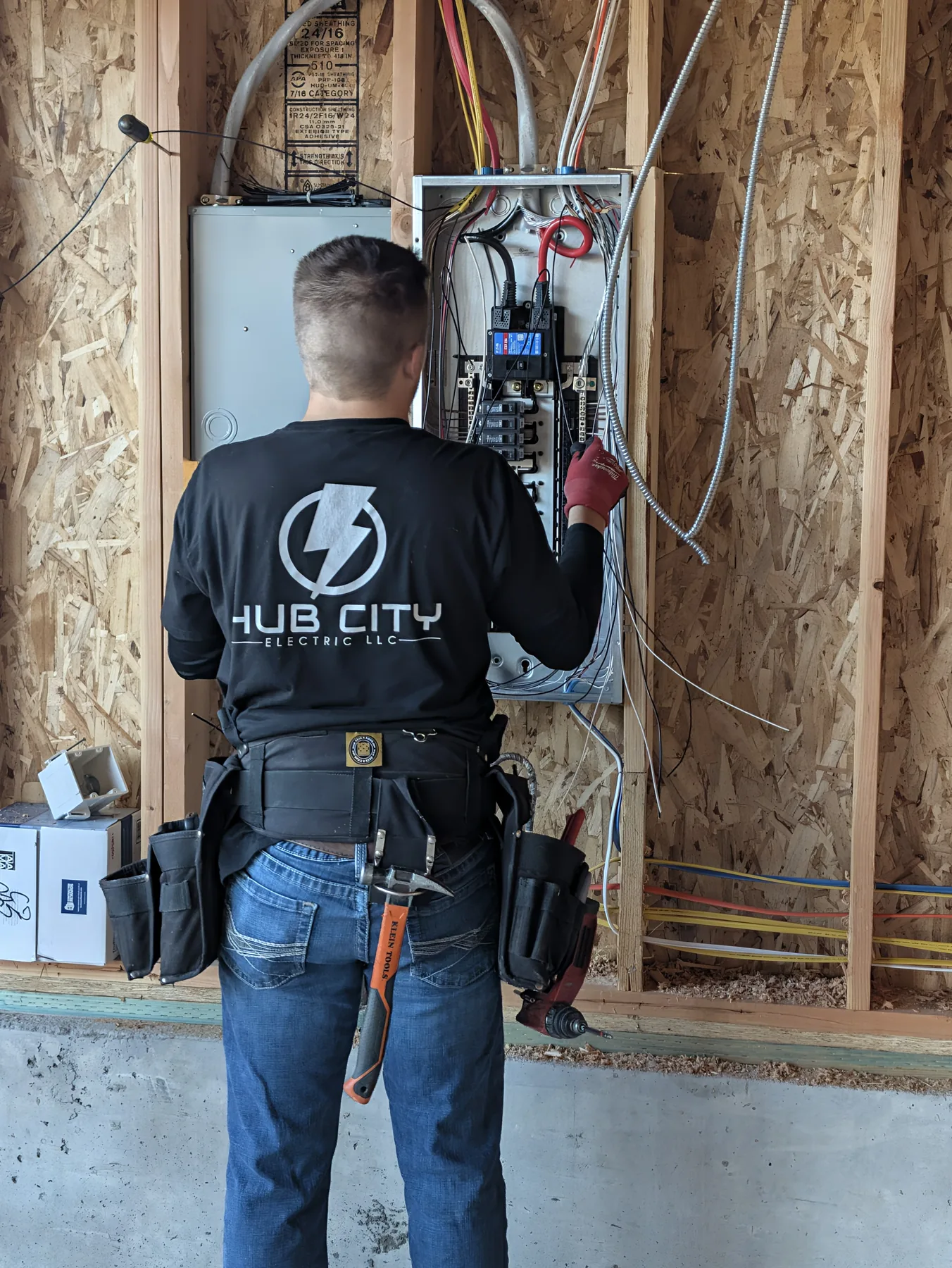
Half the mid-valley is pulling out oil furnaces, electric baseboard, and tired gas units and putting in heat pumps. Most of those HVAC quotes carry one line worth a second look: the part that assumes the electrical side is already fine. I’m Brandon. My son and I run Hub City Electric out of Albany, twenty-five minutes south of Salem, and we get called into these conversions after the equipment is already in the driveway. The heat pump is a good move. The trouble is that it is an electrical project wearing an HVAC hat, and nobody finds that out until somebody opens the panel.
What a heat pump actually asks of your panel
People picture a heat pump as one machine, so they picture one circuit. It is usually three separate asks, and only the first is small. The outdoor condenser needs a dedicated 240-volt circuit sized to its nameplate, which is straightforward. The indoor air handler needs power too, sometimes on its own circuit. Then comes the piece that quietly decides whether your service is big enough: the auxiliary heat strips.
Aux heat is the electric-resistance backup built into the air handler. When it is cold enough that the heat pump cannot keep up, or when the system runs a defrost cycle, those strips fire and make heat the brute-force way. They commonly draw as much as a whole additional electric range, sometimes two. That is the single largest new load most conversions add to a house, and it gets waved past because the conversation is about efficiency, not amps.
Why aux heat is what breaks the math in the valley
Our winters are mild most of the time, which is exactly why the strips get shrugged off. Nine days out of ten in Salem the heat pump carries the house alone and they never come on. Then a Willamette Valley cold snap parks below freezing for a stretch, everybody’s thermostat goes up, and the strips run hard for days. That is also the window when the dryer is going, somebody is cooking, and the EV is charging.
A panel that has been happy for thirty years can get pushed past its limit in that one week, and it tends to announce itself in the dark with the house full. We do not size the electrical for a mild Tuesday in April. We size it for the coldest morning of the year with the strips locked on.
Nine days out of ten the aux strips never come on. Size the panel for the tenth day, in the dark, in a cold snap, with the dryer running.
The 100-amp postwar ranch problem
Salem has a lot of postwar ranch houses still running a 100-amp service that was plenty in 1961. Put a heat pump with aux heat on top of an electric range, a dryer, and a water heater, and 100 amps stops being plenty in a hurry. Add the EV charger these households are heading toward anyway and the service is out of room.
That does not automatically mean the panel gets replaced. Sometimes the numbers work out and we just add circuits. Sometimes the service is adequate but the box has no space left, and a subpanel solves it. Sometimes it really does need to come up to 200 amps, which is far cheaper done once alongside the heat pump than twice. The answer comes from arithmetic, not from a glance.
How a load calculation settles it
A load calculation is the boring paperwork that prevents the expensive surprise. We add up what the house actually draws, then add the new heat pump loads with those strips at full tilt, and compare it against what the service can carry. It takes a visit and some math, and it gives you a real answer instead of a hopeful one.
It is also the moment to say what else is coming. If an EV is eighteen months out, or an ADU is in the back of your mind, tell us now. Building that headroom in costs very little while the panel is open and a lot more later. Here is how we handle panel upgrades for Salem homes if the calculation points that way.
What happens when the electrical turns out not to be fine
Here is the version we get called into. The HVAC crew arrives on install day, pulls the panel cover, and finds no room or an undersized service. The equipment is on site, the crew is on the clock, and the homeowner gets handed a change order nobody budgeted for. The install stalls while everybody scrambles for an electrician who can come that day. Meanwhile the old furnace is already out.
Sequence the electrician before you sign
The fix is boring and it works: have the electrical looked at before the HVAC contract is signed. A load calculation up front tells you whether this is a small line item or a real part of the project, and you decide with numbers in hand instead of on install morning. If a panel upgrade is needed, we schedule it ahead of the equipment rather than jamming it into the same day.
There are incentives around for conversions right now, and they change often enough that we will not quote them at you. What we will say is that electrical readiness usually decides whether your install lands on schedule. Get that squared away first and the rest goes smoothly.
Disconnects, whips, and the code items at the outdoor unit
Out at the condenser a short list of items has to be right. The unit needs a service disconnect within sight, so anybody working on it can kill power without walking to the panel. It needs the correct whip, the flexible run from that disconnect into the unit, sized and protected properly. It needs a proper conduit route and weather-rated fittings, because that hardware sits outside through every wet Oregon winter. And it needs correct bonding and grounding.
Two trades, one plan
Coordination matters more than it sounds. When the HVAC company and the electrician talk directly, circuit sizes match the nameplates, the disconnect is set before the unit shows up, and inspections line up. When they do not talk, the homeowner ends up relaying messages about breaker sizes they never wanted to learn.
We would rather just call them. Give us the model numbers or your contractor’s contact and we handle that side, so you are not the middleman. It is the same reason we keep the crew small: every job gets our full attention. For the broader picture, see our residential electrical work in Salem and our Salem service area page.
If a heat pump is in your plans this year, call us at (541) 220-0295 before you sign the HVAC contract. We will run the numbers, tell you straight whether your service is ready, and give you the price up front if it is not. Veterans get 5% off, and you get Brandon and a small Oregon crew with eleven-plus years behind it. Reach out here and we will get you on the calendar.
Common Questions
Does a heat pump need a panel upgrade in a Salem home?
Not always. It depends on your service size, what else the house runs, and how the aux heat strips are sized. A 200-amp service with open slots often takes a heat pump with no service work. A 100-amp postwar service already carrying a range and dryer frequently does not. A load calculation settles it, and we can run one before you sign anything.
Why do the auxiliary heat strips matter so much?
They are the largest new load most conversions add. The strips are electric-resistance backup heat that fires during a cold snap or defrost cycle, and they can pull as much as a full electric range. Because they rarely run in our mild weather they are easy to overlook, but the panel has to be sized for the worst morning of the year.
Should I call an electrician before or after the HVAC contractor?
Before you sign. Looking at the electrical up front tells you whether it is a small line item or a real part of the project, and it lets any panel work be scheduled ahead of the equipment. Waiting means finding out on install day with the old system already out.
What electrical work happens at the outdoor unit?
The condenser needs a dedicated 240-volt circuit sized to its nameplate, a service disconnect within sight of the unit, a properly sized whip into the equipment, weather-rated conduit and fittings, and correct bonding and grounding. Those items get checked at inspection.
Will you coordinate with my HVAC company?
Yes, and we prefer it. Give us the model numbers or your HVAC contractor’s contact and we handle that conversation directly, so circuit sizes match the nameplates and the disconnect is ready before the unit arrives. You should not have to relay breaker sizes between two trades.
Heat pump in your plans this year?
Call before you sign the HVAC contract. We run the load calculation, tell you what your service can carry, and give you the price up front. CCB#247871, veterans get 5% off.